
The Pre-production Process in 2026: The Crucial Preparation for Successful Videos
Pre-production determines 80% of your video's success. Learn how to save time and budget in 2026 with AI and smart planning. ✓ Step-by-step plan ✓ Tips
You have a great idea for a corporate film, commercial, or event video. The temptation is strong to immediately grab the cameras and start filming. But wait. The most successful video productions don't start on set — they begin weeks earlier, at the drawing board.
The pre-production process is the invisible foundation upon which every professional video rests. It's the phase where concepts are transformed into concrete plans, where budgets are set, and where everyone gets on the same page. And in 2026, this phase is more important than ever, thanks to the rise of AI tools and virtual studios that fundamentally change how we prepare videos.
In this article, we'll take you through the entire pre-production process: from the initial briefing to the final check before the shoot day. You'll learn why 79% of video creators now use AI in this phase, how smart planning saves 60-90% of time, and which steps are indispensable for a flawless end result.

Why Pre-production Makes the Difference Between Success and Failure
The statistics don't lie: thorough pre-production not only saves time and money during filming but also prevents costly mistakes that you might otherwise only discover in the editing room. Think of a wrong location, an unclear message, or a script that doesn't resonate with your target audience.
In 2026, we see that companies investing in solid preparation spend an average of 30-40% less time in the production and post-production phases. Why? Because everyone knows exactly what needs to be done, when, and how. No surprises, no improvisation at crucial moments.
Moreover, strong pre-production ensures that all team members — from director to actor, from cameraman to sound engineer — work with the same vision. This prevents miscommunication and contributes to a professional end result that perfectly aligns with your business goals. For more information on how we approach this process, visit our page on video production.
Pre-production in Numbers: The Impact in 2026
The Revolution of AI in the Pre-production Process
2026 marks a turning point in how we prepare videos. Where pre-production used to be a labor-intensive process of weeks of brainstorming, sketching, and planning, we now see an explosive growth in the use of AI tools. Recent research shows that 79% of video creators use AI in at least one phase of the production process — an increase of 64% since 2024. This technology is particularly popular in pre-production, with 65% of creators using AI for visualizing ideas.
Think of tools like Midjourney and Adobe Firefly that can generate concept visualizations in minutes, which previously took hours of manual sketching. Or AI scriptwriters that help you get your message clear and structured on paper. The AI video generator market reached a value of $946 million in 2026 and is growing at an annual rate of 20.3%.
But beware: AI is a tool, not a replacement for human creativity and strategic thinking. The best results occur when you combine AI with experienced professionals who understand how to tell a story that resonates with your target audience. More about our strategic approach can be found on our contact page.
The 7 Essential Steps of the Pre-production Process
1. Briefing and Concept Development (week 1-2)
Everything starts with a clear understanding of what you want to achieve. In this phase, you define the objectives of your video: do you want to increase customer engagement, build brand awareness, generate leads, or drive website traffic? You also define your target audience by analyzing demographics and identifying their needs. The creative concept is developed: what story will you tell and how does it align with your brand identity?
2. Scriptwriting (week 1-2)
The script is the backbone of your video. Here, you write out all dialogues, voice-overs, and action descriptions. For business videos, it's crucial to keep your message concise and clear — especially for shorter formats like social media content. In 2026, we see that AI tools can reduce scriptwriting time by 60-90%, but human input remains indispensable for authenticity and brand personality.
3. Storyboarding and Visualization (week 2)
A storyboard translates your script into visual sketches, including camera angles, movements, and composition. This helps the entire team gain a shared vision and identify technical issues early on. With modern AI tools, you can now generate realistic visualizations in a few hours that previously took days.
4. Casting and Location Scouting (week 2-3)
Who will appear in your video? Whether it's professional actors, your own employees, or industry experts — the right people in front of the camera make all the difference. At the same time, you scout locations that fit your story and budget. Consider practical matters such as permits, accessibility, and availability of power and Wi-Fi.
5. Budgeting and Planning (week 3)
Now it gets concrete: what will this project cost? You create a realistic budget that covers all aspects: equipment, personnel, travel expenses, location rental, catering, and post-production. A 60-second marketing video can range from €1,500 for a simple smartphone production to €15,000+ for a fully produced commercial with actors and special effects.
6. Crew Assembly and Equipment Arrangement (week 3-4)
You assemble your team: cameramen, sound engineers, director, producer. You reserve the necessary equipment and test everything in advance. In 2026, we increasingly see the use of virtual studios where almost everything except the presenter is virtual — this requires specialized knowledge and thorough preparation.
7. Production Planning and Final Checks (week 4)
The last week before the shoot day: you create a detailed shooting schedule (shotlist), call sheets for everyone involved, and arrange final details such as permits, insurance, and backup plans for bad weather. Good preparation means that on the shoot day itself, you can fully focus on capturing great footage, not on solving logistical problems.
Virtual Studios: The Future of Flexible Video Production
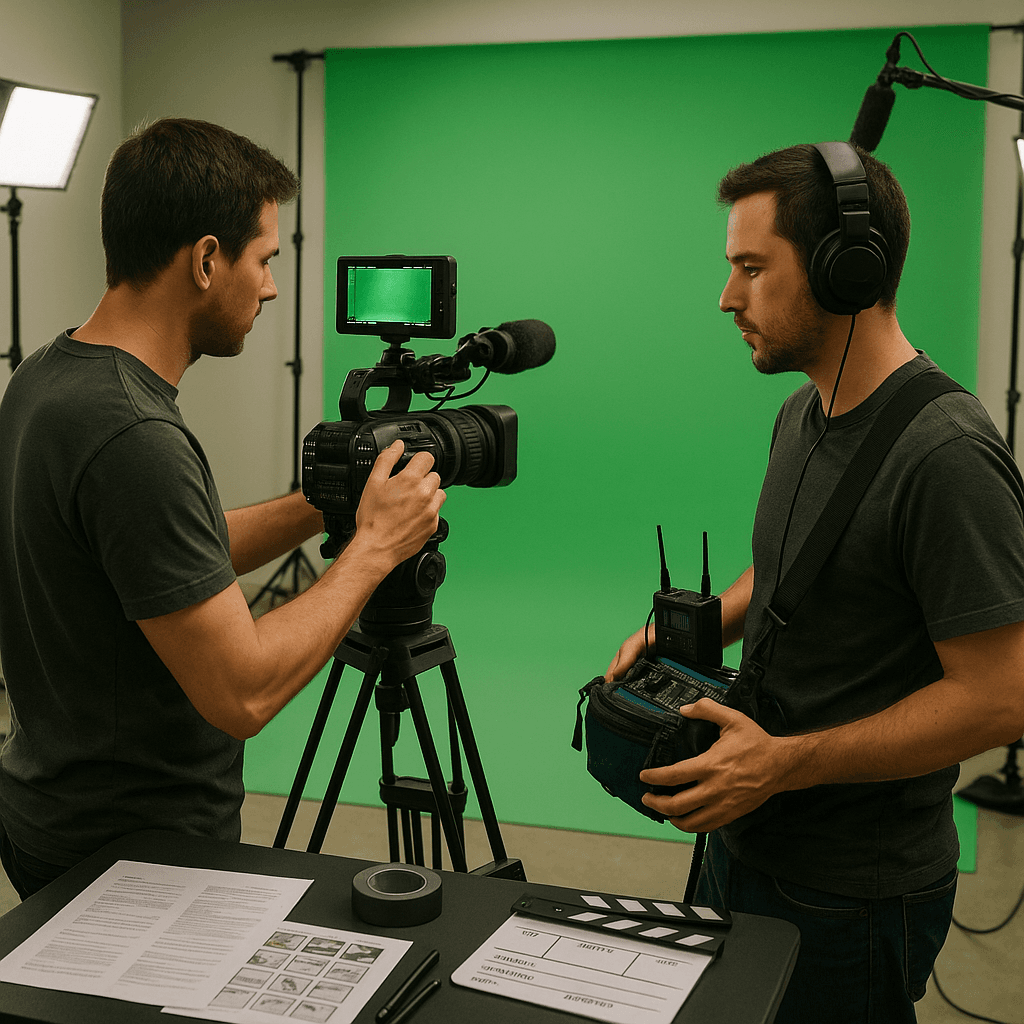
One of the most striking trends in 2026 is the rise of virtual studios. Here, almost everything except the presenter and possibly a table is virtual: backgrounds, branding, graphic elements, and even complete sets are added digitally.
This technology offers enormous flexibility. You can switch from a modern office to an industrial setting, or from a tranquil nature background to a dynamic city skyline, in just minutes. For businesses, this means you can create multiple variations for different target audiences or campaigns with a single studio recording.
But this is where pre-production comes in: a virtual studio requires precise planning. You need to determine in advance which virtual elements you need, how the lighting should be matched to the digital background, and how the presenter should be positioned. Without thorough preparation, you risk the virtual elements looking unnatural or not matching the footage.
Would you like to know more about how we use virtual studios? Contact us for a no-obligation consultation.
Why Companies Choose Professional Pre-production
Cost Savings
By mapping out all costs in advance and creating a realistic plan, you prevent budget overruns and unnecessary expenses during production. An investment in pre-production yields an average of 3-5x ROI.
Time Savings
With AI tools and thorough preparation, you can reduce production time by 30-40%. What used to take a month can now be achieved in two weeks — without compromising quality.
Professional End Result
When everyone works with the same vision and all technical aspects are thought out in advance, you get a video that not only looks good but also effectively supports your business goals.
Pre-production for Different Video Types: What's the Difference?
Not every video requires the same pre-production approach. A corporate film needs different preparations than a livestream or a social media campaign. Let's look at the key differences:
Corporate Films and Commercials
For corporate films and commercials, pre-production is the most extensive. You deal with scripts, actors, locations, and often complex production schedules. The average lead time is 4-6 weeks, but can extend to 8-12 weeks for large campaigns. Here, the investment in concept and storyboarding is crucial — strong preparation determines 80% of your commercial's success.
Social Media Content
For shorter social media videos, speed is often more important than perfection. Pre-production is more compact (1-2 weeks), but no less important. You need to determine in advance which platforms you are producing for (vertical for Instagram/TikTok, horizontal for YouTube/LinkedIn) to avoid costly post-editing. With AI tools, you can now prepare an entire social media campaign in one afternoon that would traditionally take a week.
Livestreams and Webinars
For livestreams, the focus is on technical preparation and risk management. You don't get a second chance, so everything has to go right the first time. Pre-production includes extensive technical tests, backup plans for internet outages, and detailed rundowns. On average, you invest 2-3 weeks in preparing a professional livestream.
The Role of the Video Producer in the Pre-production Process
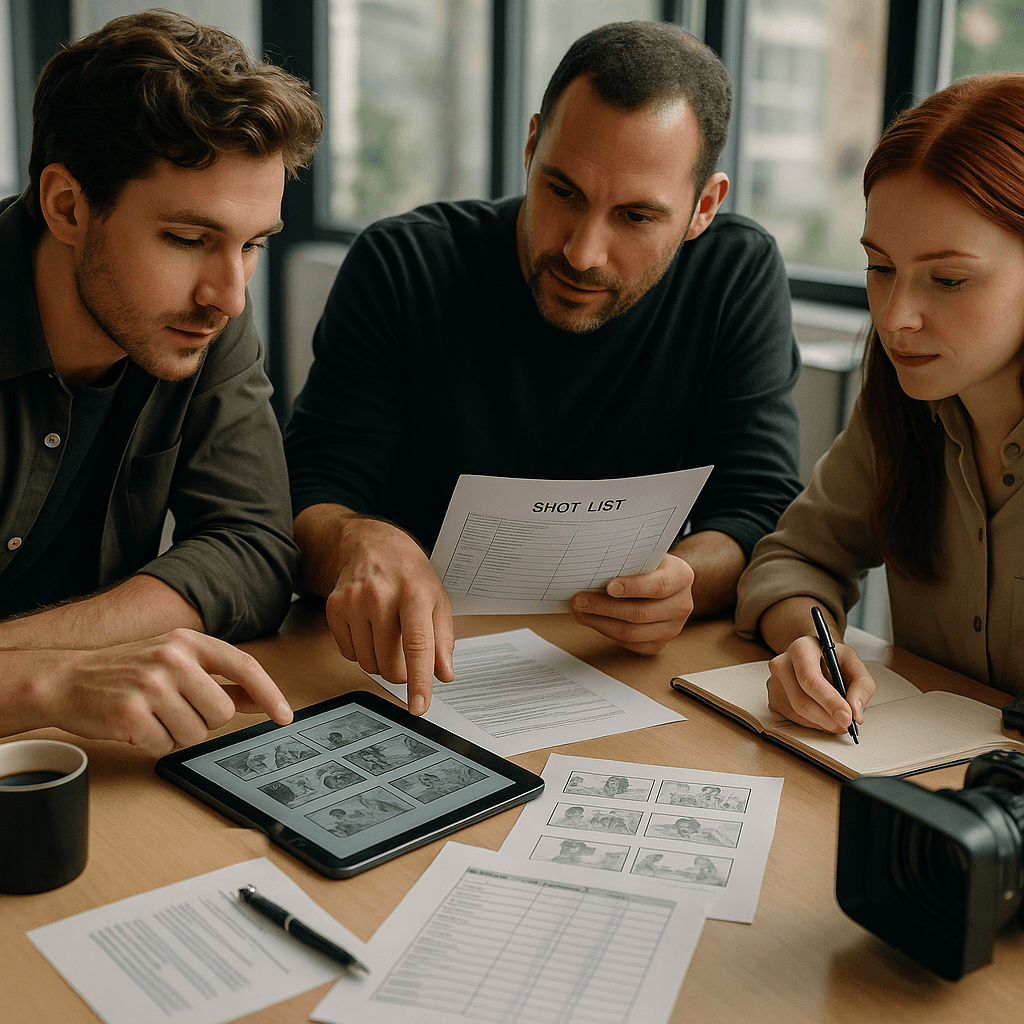
An experienced video producer during pre-production is much more than a technical executor — they are a strategic partner who considers your business goals and translates them into impactful visuals.
At VidéPro, we use the 'Deep Dive' method: an in-depth strategic preliminary process in which we work with you to determine the video's objective, target audience, core message, desired emotion, and how we will measure success. This results in a clear roadmap and a stress-free process for you as a client.
The best video producers take everything off your hands: from concept development to scriptwriting, from casting to location scouting, from planning to directing. You only need to focus on the content — the rest is taken care of. This is what distinguishes professional pre-production from 'just making a video'.
Curious how we approach this? View our complete video production process or contact us directly.
The Impact of Video in 2026: Why Investing in Pre-production Pays Off
Let's set the context: in 2026, video is no longer a 'nice to have' but an essential part of every marketing strategy. Research shows that:
- 97% of marketers believe video helps consumers better understand products or services
- 72% of customers prefer to learn about a product or service via video than via text
- Online videos account for more than 82% of all internet traffic
- 81% of companies use video as a marketing tool
But here's the crux: not every video delivers these results. The difference between a video that goes viral and a video that goes unnoticed often lies in the preparation. Strong pre-production ensures that your video:
- Meets the needs and preferences of your target audience
- Communicates a clear message without noise
- Is visually and technically at the highest level
- Delivers measurable results (more leads, higher conversion, better brand awareness)
According to an external source on video pre-production best practices, thorough preparation is key to marketing videos that increase your online brand visibility and achieve business goals.
Frequently Asked Questions About the Pre-production Process
Best Practices for Successful Pre-production in 2026
After hundreds of video productions, we at VidéPro have identified some golden rules that make the difference between good and excellent pre-production:
1. Start with a Crystal-Clear Vision
Before you spend a single euro or invest a single hour, you need to know exactly what you want to achieve. Not 'make a nice video', but: 'we want to generate 30% more leads through our website' or 'we want to introduce our new service to existing customers'. This focus determines all further choices.
2. Know Your Target Audience Better Than Yourself
Don't make a video for 'everyone' — make a video for a specific target audience. Analyze demographic data, behavioral patterns, and preferences. What problems keep them up at night? What language do they speak? On which platforms are they active? How do they consume content? These insights determine your tone of voice, visual language, and distribution.
3. Create a Realistic Budget (and Keep 10% in Reserve)
Nothing is more frustrating than discovering halfway through a production that you've run out of budget. Map out all costs: equipment, personnel, locations, travel, catering, permits, insurance, and post-production. And always keep 10% in reserve for unforeseen expenses — they always come up.
4. Build a Strong, Reliable Team
A video production stands or falls with the people behind it. Choose team members who are not only technically skilled but also reliable, flexible, and passionate. One unreliable person can jeopardize an entire production.
5. Communicate Clearly and Document Everything
Ensure clear communication channels between all involved parties. Use project management tools like Trello or Asana to keep everyone informed. Document all agreements, plans, and schedules in writing — 'he said, she said' discussions only waste time and energy.
6. Plan for Flexibility
No matter how well you plan, something always goes differently than expected. Rain on the shoot day, a sick actor, technical problems. Build flexibility into your planning: backup locations, alternative shoot days, Plan B scenarios. The best producers are not those for whom nothing ever goes wrong, but those who can quickly and creatively adapt when things do go wrong.
7. Think About Post-production During Pre-production
Many novice video creators only focus on the shoot day and forget about editing. But decisions you make in pre-production have a big impact on post-production. What aspect ratio will you film in? What frame rate? How will you record the audio? What colors do you want in the grading? By thinking about this in advance, you prevent discovering in the editing room that you're missing crucial shots or that the audio is unusable.
Why VidéPro: Total Peace of Mind from Concept to Distribution
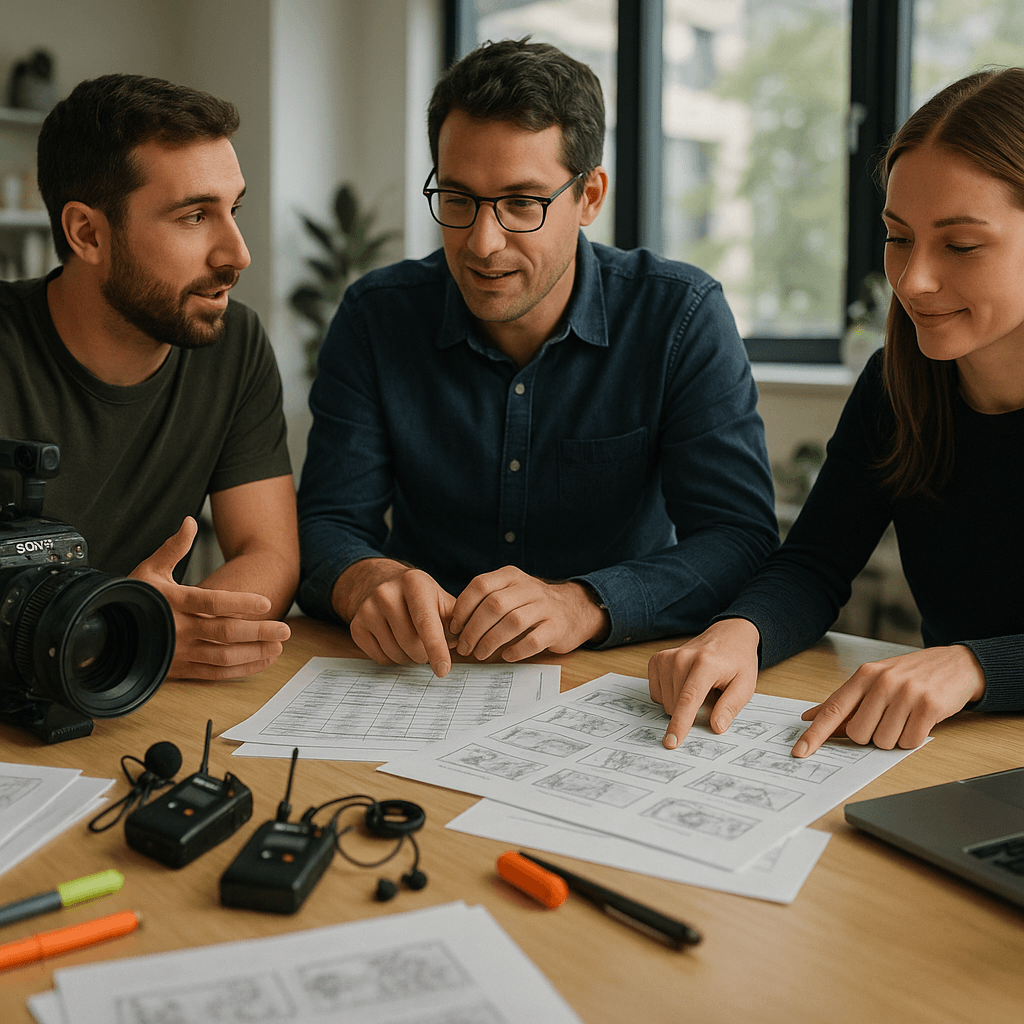
At VidéPro, we believe that the best videos are created when the client can fully focus on the content, while we handle all technical, logistical, and creative aspects. Our 'Deep Dive' method ensures that we not only create a beautiful video but a video that measurably contributes to your business goals.
Our pre-production approach includes:
- Strategic thinking: We act as your strategic partner, not just an executor. We ask the right questions and translate your vision into a concept that works.
- Complete planning: From the initial briefing to the final check before the shoot day — we arrange everything. You only need to be present as an expert.
- Network of specialists: We have an extensive network of cameramen, sound engineers, actors, voice-over artists, and other specialists. For each project, we assemble the perfect team.
- Transparent communication: You always know where you stand. We keep you informed with clear updates and are always available for questions.
- Quality guarantee: We only deliver when you are 100% satisfied. Two rounds of feedback are included as standard.
The result? A stress-free process, a video that perfectly matches your brand, and measurable impact on your business goals. That is the VidéPro promise.

Ready to Perfectly Prepare Your Next Video Production?
Contact VidéPro for a no-obligation consultation about your project. We'll guide you through our pre-production process and show you how we transform your vision into impactful videos that deliver results.
Start with a free Deep Dive session