Video Strategy Session 2026: From Concept to Conversion
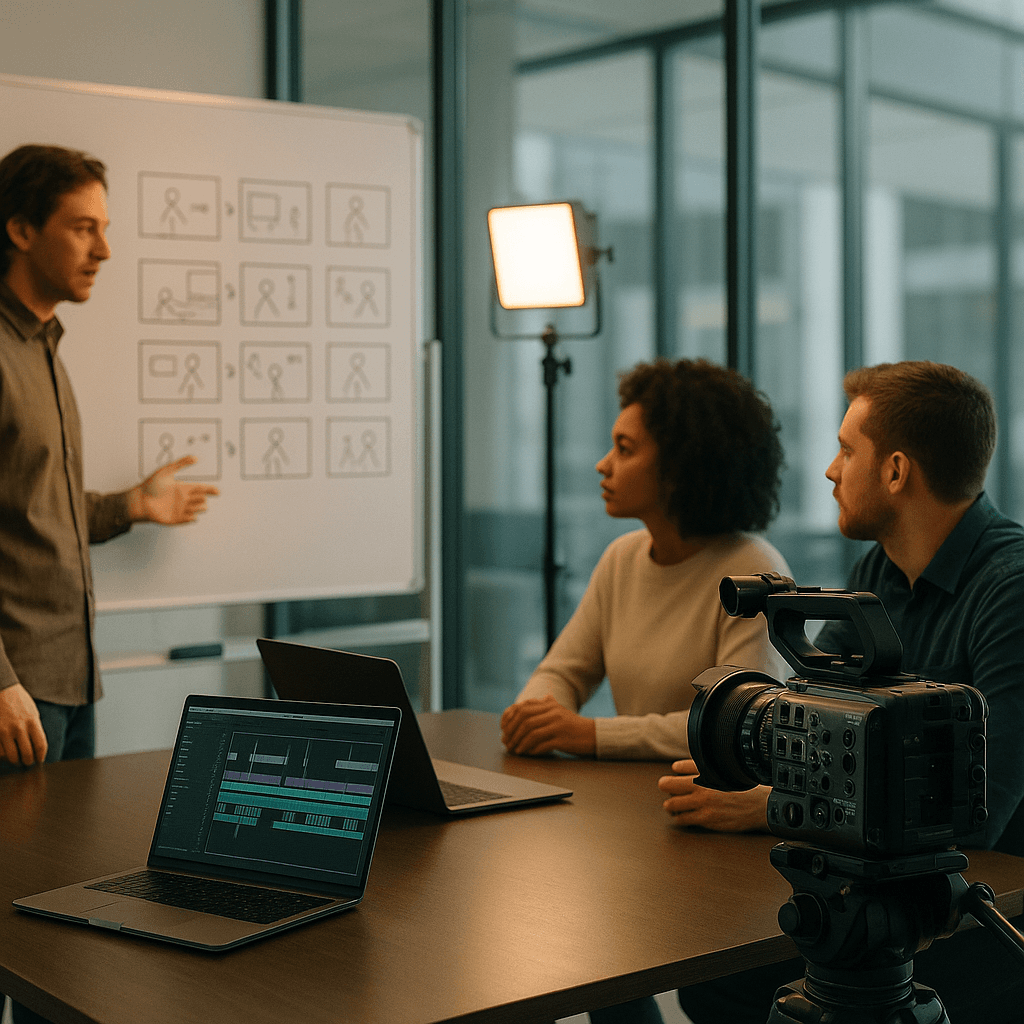
Video strategy session 2026: learn how strategic video planning can achieve up to 80% more conversions. Practical tips and insights for business success.
In 2026, video is no longer a nice-to-have in your marketing mix — it has become the backbone of successful business communication. But here's the catch: more than 60% of companies investing in video don't see the results they expected. Not because their videos are bad, but because they lack a strategic foundation.
A video strategy session is the difference between videos that are beautiful and videos that work. It's the moment you stop 'just filming' and start communicating with purpose. In this article, I'll take you through what an effective video strategy session entails, why it's crucial for your ROI, and how to strategically approach video in 2026.
Why Strategy Makes the Difference
What exactly is a video strategy session?
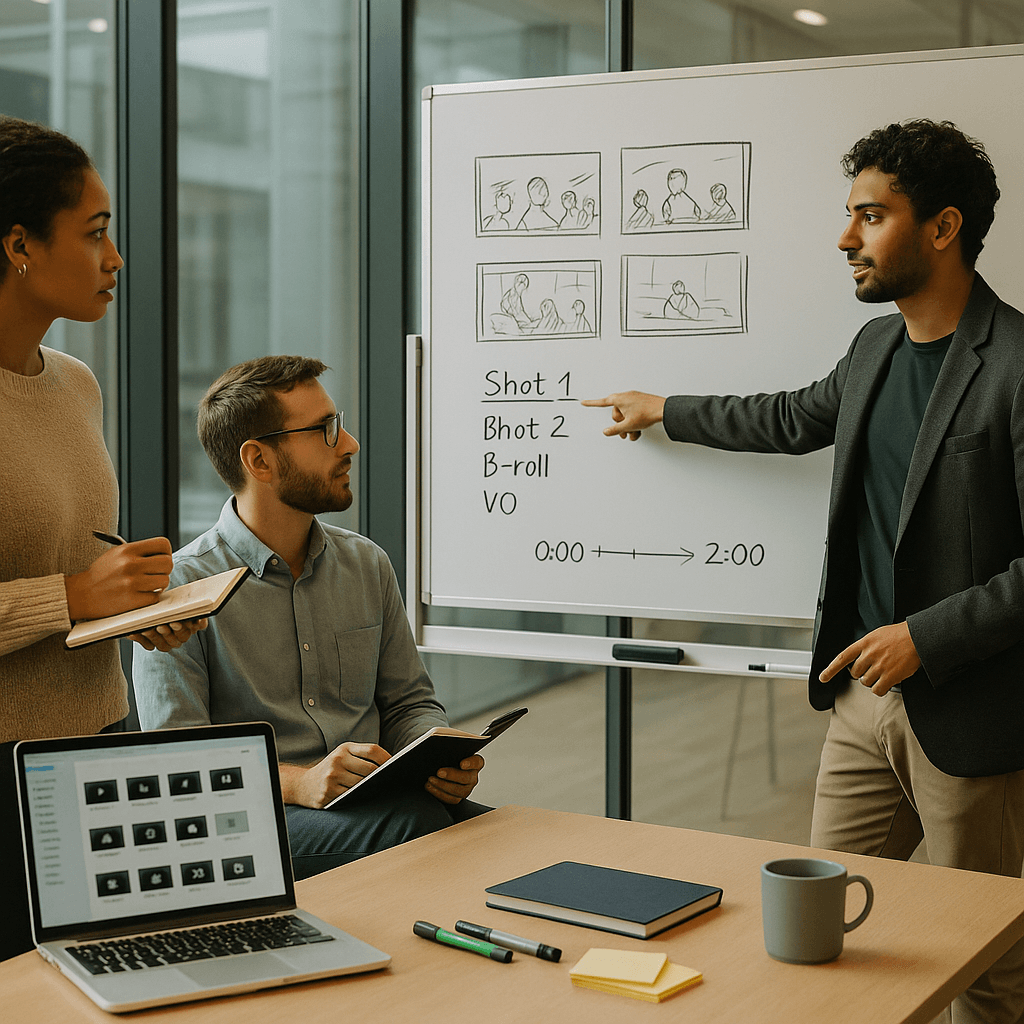
A video strategy session is a structured consultation where you answer the fundamental questions before production begins, which make the difference between a video that is seen and a video that converts.
It's not about technology, cameras, or editing — it's about psychology, timing, and impact. In such a session, you determine:
- For whom you are making the video (and that's more specific than 'our target audience')
- What the video should concretely achieve (leads, trust, understanding, accelerating decisions)
- Where the video will be used (LinkedIn, website, sales calls, email)
- When someone sees the video in the customer journey
- How you will measure success
Without these answers, you make videos based on feeling. With these answers, you make videos with predictable results.
Why companies without a video strategy waste money
More than 91% of companies now use video marketing — but not everyone does it effectively. The problem? They start with the question 'what are we going to film?' instead of 'what should this achieve?'
Here are the three biggest pitfalls:
1. No clear goal
A video that needs to create 'more visibility' is too vague to be successful. Do you want people to remember your brand? To understand a product? To contact you? Each goal requires a different type of video, a different tone, a different length.
2. Wrong channel strategy
A 4-minute corporate film works great on your website but completely fails on Instagram. In 2026, social media algorithms massively favor video, but only if you understand their rules: short formats, strong hooks, subtitles, mobile-first.
3. No alignment with the customer journey
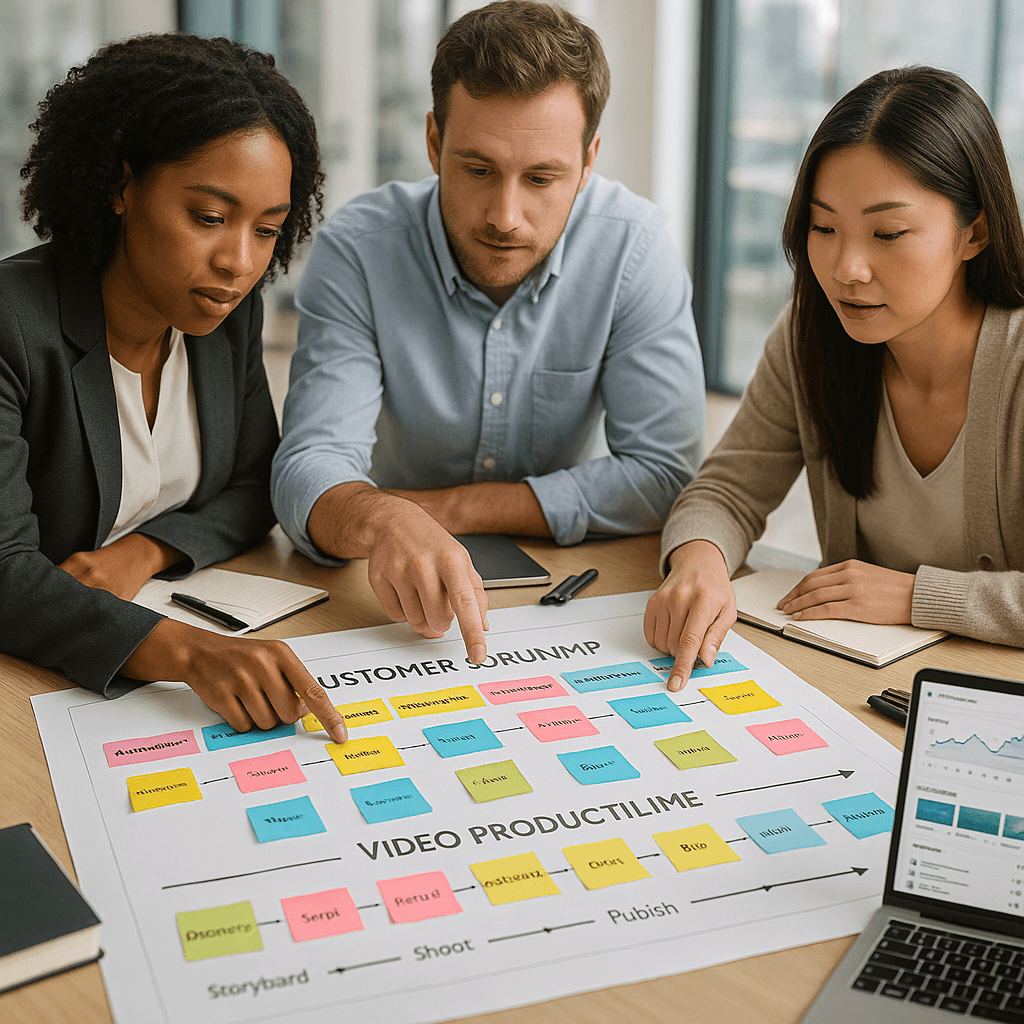
Someone seeing your brand for the first time needs a different video than someone who has already requested three quotes. In the awareness phase, short storytelling videos work. In the consideration phase, product demos and explainer videos are effective. For the decision phase, testimonials and case studies are most convincing.
A good video strategy session prevents these mistakes by making the right choices beforehand.
The power of strategic thinking
In 2026, video has evolved from a supporting tool to a strategic instrument that directly influences positioning, trust, and decision-making. But that doesn't happen automatically.
Strategic thinking means using video as part of a larger plan. You don't make isolated videos, but an ecosystem of content that reinforces each other:
- A hero video on your homepage that tells your brand positioning
- Product-specific videos that eliminate doubt
- Social content that keeps you visible between decision points
- Testimonials that provide the final push
Each type of video has a role, a place, and a measurable goal. That's what you design in a strategy session.
The 5 phases of an effective video strategy session
1. Define Goal and KPIs
Start with the end destination. What should this video concretely achieve? Think in measurable terms: X% more leads, Y minutes longer session duration, Z inquiries via contact form. Link your video strategy to business goals, not creative ambitions.
2. Sharpen Target Audience and Context
Who is this video for? And more importantly: in what situation will they see it? Someone actively looking for a solution watches differently than someone scrolling on LinkedIn. Someone who has had a sales call has different questions than a cold lead. Context determines form.
3. Choose Channel and Format
Where will the video be viewed? On LinkedIn, short, subtitled videos with a strong hook work well. On your website, you can elaborate more. In an email campaign, a personal video message works better than a polished commercial. Each channel has its own language.
4. Structure Content and Storytelling
Only now do you start thinking about what you will say and show. What is the core of your message? What is the strongest opening line? What emotion do you want to evoke? How do you end with a clear call-to-action? Strategy determines structure, structure determines script.
5. Measure and Optimize Success
How do you know if it's working? Determine in advance which metrics you will track: view-through rate, click-through rate, conversions, average watch time. In 2026, data-driven optimization is crucial — videos that don't measure cannot improve.
Trends and best practices for 2026
The video market is changing rapidly. What worked last year may already be outdated this year. Here are the key trends you should include in your strategy session:
Short-form video dominates
Videos from 15 to 60 seconds perform best on mobile and are easier to share. Platforms like Instagram Reels, TikTok, and YouTube Shorts receive algorithmic preference. This doesn't mean long videos are dead — but they have a different function (education, in-depth, trust).
Authenticity wins over perfection
Slick, overproduced videos often feel inauthentic in 2026. Authentic videos, even made with a smartphone, often perform better. People recognize authenticity, and that builds trust. This doesn't mean everything has to be messy — but that humanity is more important than perfection.
AI supports, does not replace
AI tools can help you with transcriptions, subtitles, editing assistance, and even voice-overs. But the strategy, storytelling, and emotional connection remain human work. Smart video production combines the best of both worlds.
Video ads are getting smarter and cheaper
SMEs see up to 26% lower costs per lead with video ads, provided they work data-driven. This requires continuous optimization: testing, measuring, adjusting. A strategy session helps you build in the right variables from the start.
Common video types in a strategic mix
Corporate Film
Tells your brand story and positioning. Ideal for your homepage, pitches, and recruitment. Goal: build trust and recognition.
Product Demo
Shows how your product or service works. Effective in the consideration phase. Goal: eliminate doubt and create understanding.
Social Content
Short, catchy videos for LinkedIn, Instagram, or TikTok. Goal: visibility, engagement, and staying top-of-mind.
Testimonial
Customers tell their success story. Powerful in the decision phase. Goal: provide social proof and increase conversion.
Explainer Video
Makes complex concepts understandable. Works well in educational content and customer service. Goal: transfer knowledge and lower barriers.
Livestream
Real-time connection with your audience. Ideal for events, webinars, and Q&As. Goal: build interaction and community.
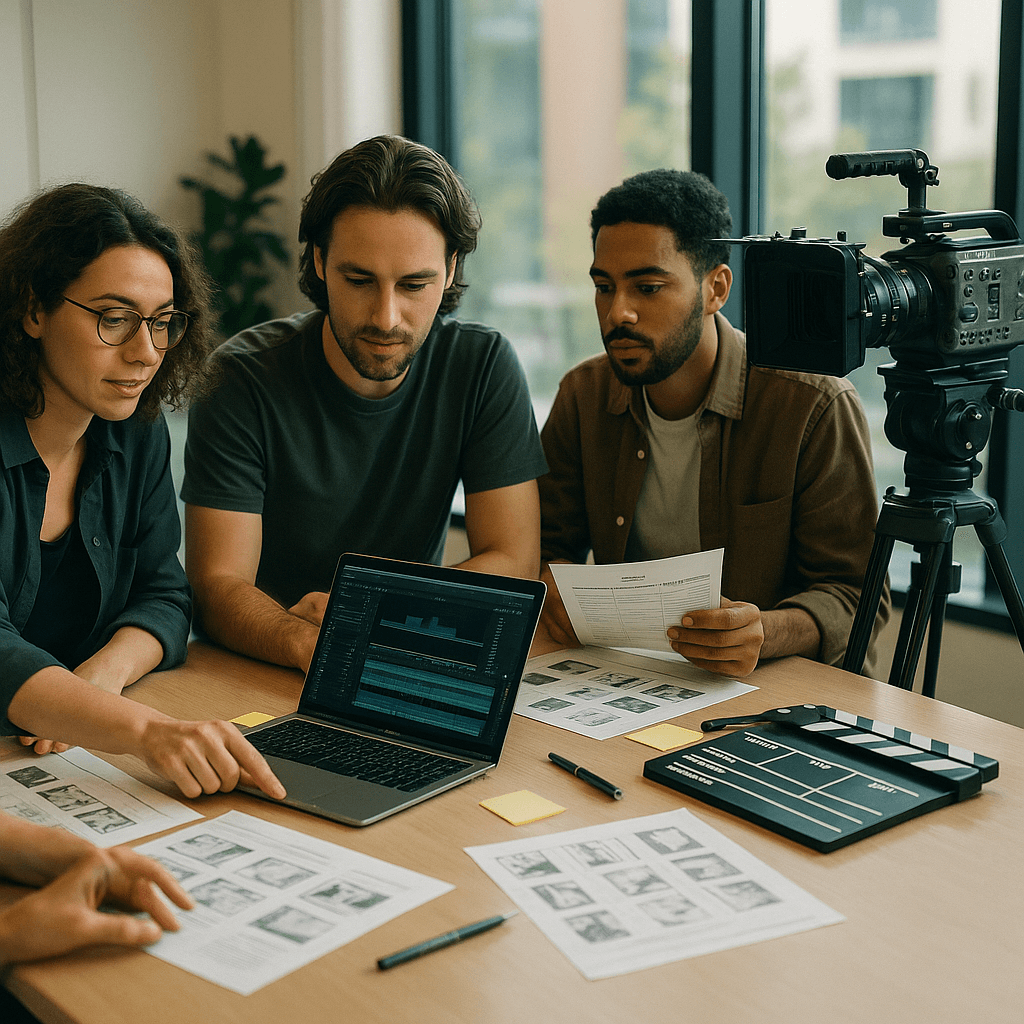
The role of a strategic video partner
You can conduct a video strategy session internally, but many companies choose an external partner who does this daily. Why?
Objectivity: An external party asks questions you wouldn't ask yourself. They challenge assumptions and help you become sharper.
Experience: They have made hundreds of videos and know what works in your industry, for your target audience, on your channels.
Efficiency: They prevent you from wasting time and budget on videos that won't work.
At VidéPro, we see ourselves as a strategic video partner, not just a producer. Our strategy sessions always start with listening: what are your goals, what have you already tried, what challenges are you facing? Only then do we think about formats, channels, and production.
We believe that a good video starts before the camera turns on — with the right questions, the right choices, and a plan that delivers measurable results.
Practical tips for your own video strategy session
Want to get started with a video strategy session yourself? Here are concrete tips:
1. Invite the right people
A strategy session works best with a mix of marketing, sales, and management. Marketing knows what content works, sales knows what questions customers ask, management knows which goals have priority.
2. Prepare with data
Don't come with a blank canvas. Analyze beforehand: what content is already performing well? Where do people drop off? What questions do you often receive? Data sharpens your strategy.
3. Think in series, not in isolated videos
One video is rarely enough. Think in campaigns: a series of videos that reinforce each other and tell a story together. That's more efficient in production and more effective in results.
4. Plan the next steps immediately
A strategy session is worthless if no action follows. End with concrete agreements: who does what, when will it be produced, how will we measure?
Frequently asked questions about video strategy sessions
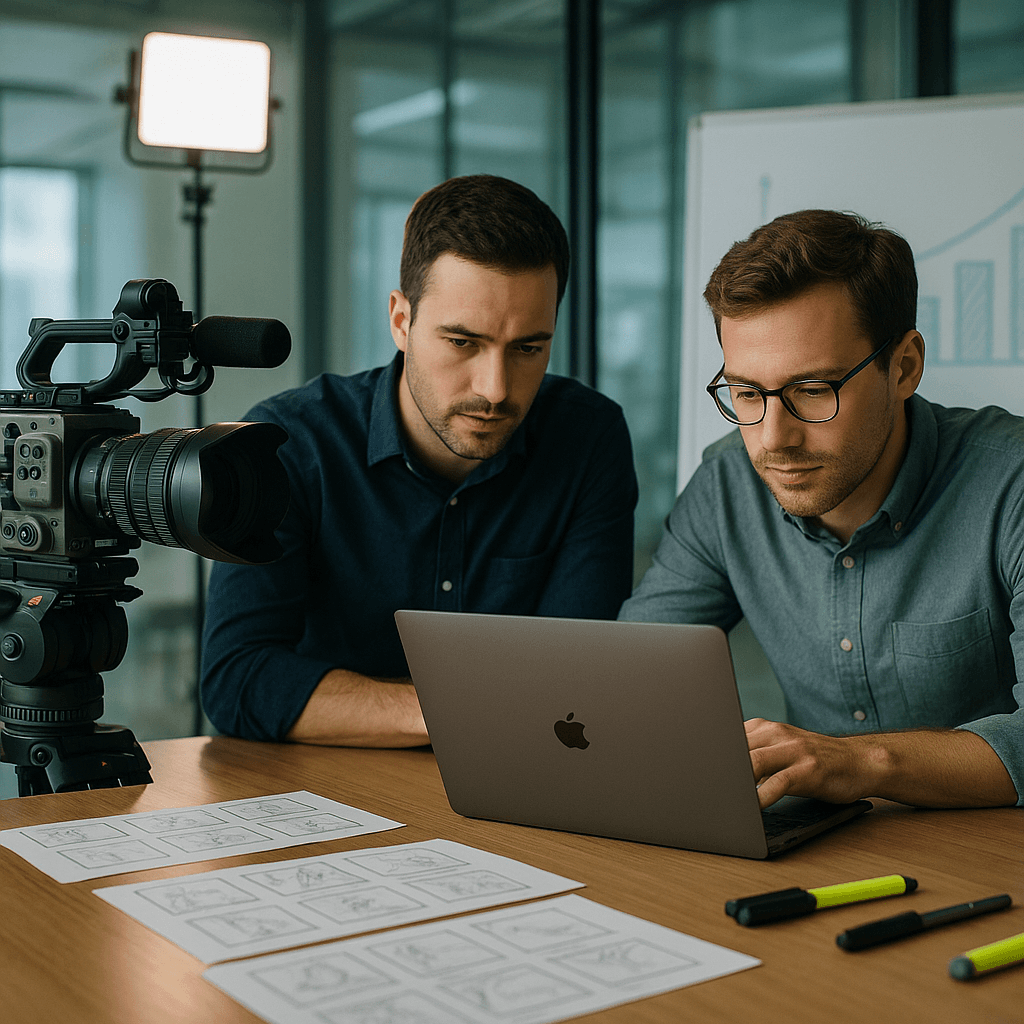
From strategy to measurable results
The beauty of a good video strategy is that you don't have to guess if it works — you can measure it. In 2026, we have more data than ever:
- View-through rate: How many people watch your video all the way through?
- Click-through rate: How many people click through to your website or landing page?
- Conversions: How many leads or sales does the video generate?
- Cost per lead: What does it cost you to acquire one lead via video?
Content marketing generates 3x as many leads as traditional marketing at 62% lower cost per lead. But only if you work strategically.
A video strategy session helps you determine in advance which metrics are important, so you can optimize after launch. No guesswork, but data-driven growth.

Ready to get strategic with video?
At VidéPro, we start every project with a thorough strategy session. We help you move from vague ideas to concrete plans — with videos that are not only beautiful but also deliver measurable results. Whether you want to create one video or plan a complete annual campaign: we think along with you.
Schedule a strategy session