
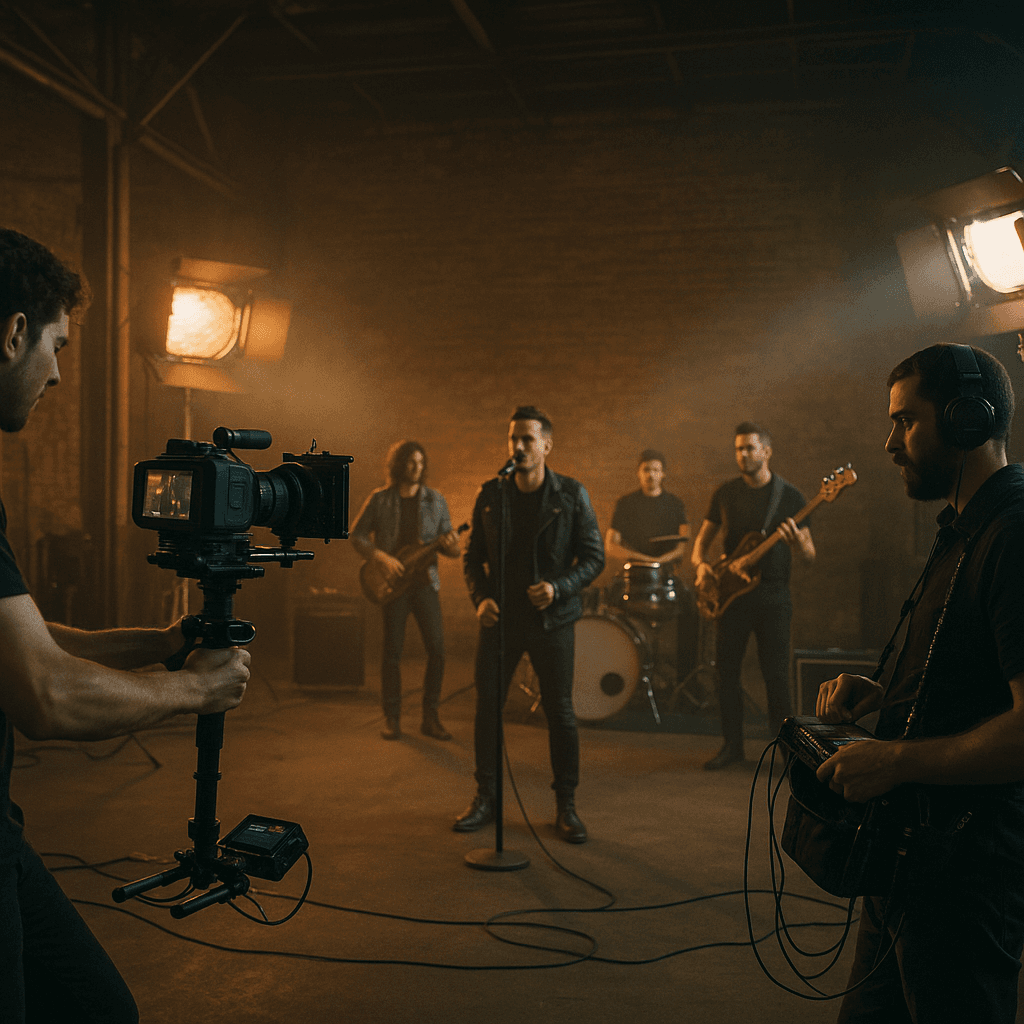
Recording a Music Video in 2026: The Ultimate Guide for Artists and Bands
Recording a music video in 2026? Read our complete guide on music videos: trends, costs, production process, and how to make your clip go viral.
Why recording a music video in 2026 is essential for your music career
In 2026, recording a music video is no longer a luxury, but a necessity for any artist or band that wants to be taken seriously. Music platforms like YouTube, Spotify, and TikTok show a clear preference for visual content — tracks with a music video receive an average of 80% more streams than songs without a video. What's more: people process visual information up to 60,000 times faster than text, meaning your musical message comes across much more powerfully when combined with strong visuals.
The music industry has undergone a radical shift. Where music videos used to be primarily shown on MTV, they are now the starting point for viral social media campaigns. A well-produced music video can make the difference between a local act and an international breakthrough. In this guide, we'll take you through the complete process of recording a music video: from concept development to distribution, with current trends and practical tips for 2026.
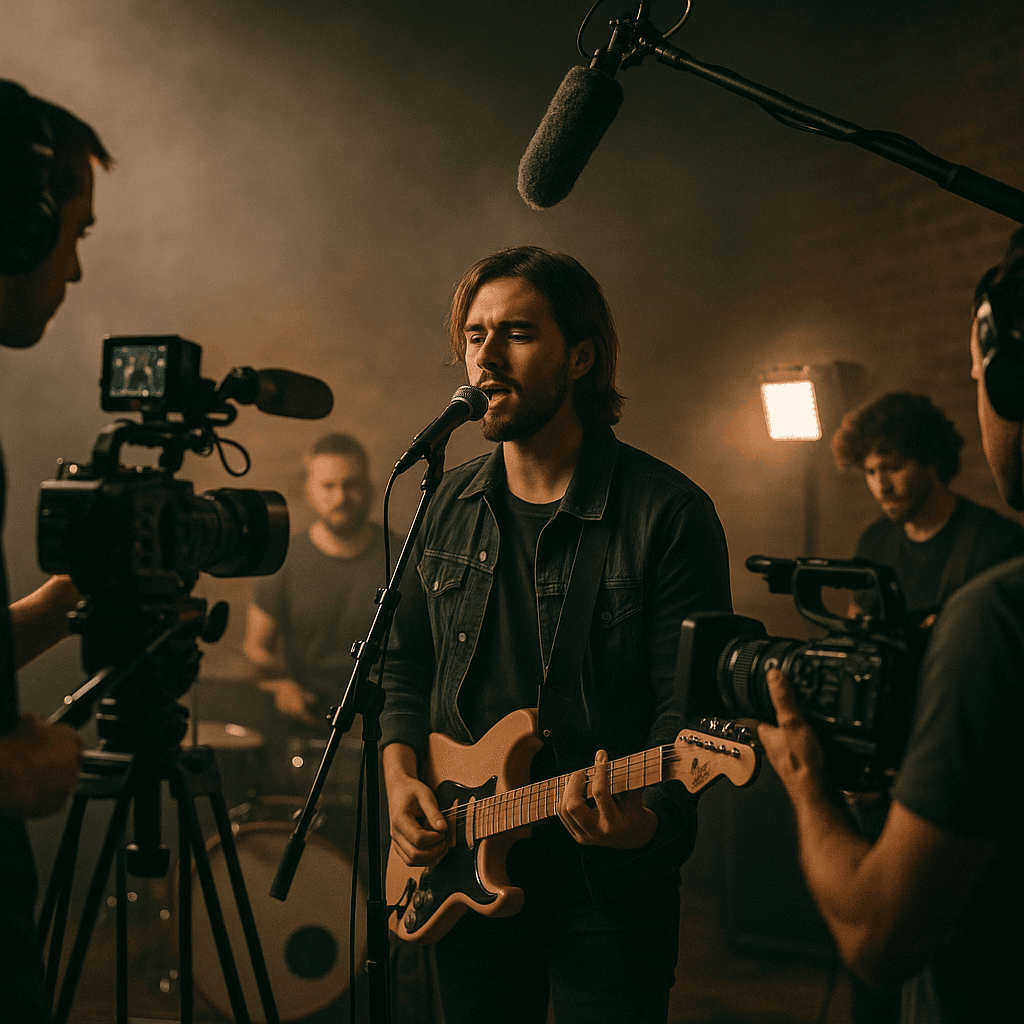
The power of music videos in the streaming era
In 2026, music videos are the calling card of every artist. They not only determine how your music is experienced, but also how streaming service algorithms push your content. Platforms like YouTube and TikTok prioritize video content, which means a strong music video can exponentially increase your reach.
The numbers don't lie: video ads increase brand recognition by an average of 139% compared to traditional promotion. For musicians, this means a professionally produced music video not only generates more streams, but also more concert tickets, merchandise sales, and fan engagement. Recording a music video is therefore a strategic investment in your career, not an expense.
Moreover, the combination of audio and visuals creates an emotional connection that pure listening cannot match. Fans want to see who you are, what your story is, and what world you create around your music. A music video gives you the chance to bring that world to life.
Music videos in numbers: why it works
Music video trends 2026: what works now?
The world of music videos is evolving rapidly. In 2026, we see a number of clear trends that determine which music videos go viral and which fade into oblivion:
1. Vertical video for social media
TikTok, Instagram Reels, and YouTube Shorts dominate how people discover music. Recording a music video in vertical format (9:16) is no longer an afterthought, but a strategic choice. Many artists now produce two versions: a traditional horizontal clip for YouTube and a vertical variant optimized for social media. The vertical version generates 3x more engagement on mobile platforms.
2. Storytelling over budget
The era of exorbitantly expensive music videos with huge budgets is over. In 2026, it's all about authentic stories that resonate with your audience. A simple clip with a strong story performs better than a visual spectacle without emotional impact. Think of one-take shots, intimate close-ups, and locations that are meaningful to your music.
3. AI support in post-production
Artificial intelligence has democratized music video production. AI tools help with color correction, removing unwanted objects, and even generating visual effects that were previously only accessible to large studios. However, human creativity remains crucial: AI is a tool, not a replacement for artistic vision.
4. Interactive and multi-channel releases
The smartest artists use their music video as a starting point for a broader campaign. Think of behind-the-scenes content, lyric videos, acoustic versions, and remix challenges. Each variant is strategically deployed on different platforms to generate maximum reach. Recording a music video in 2026 therefore actually means: creating a content ecosystem around one track.
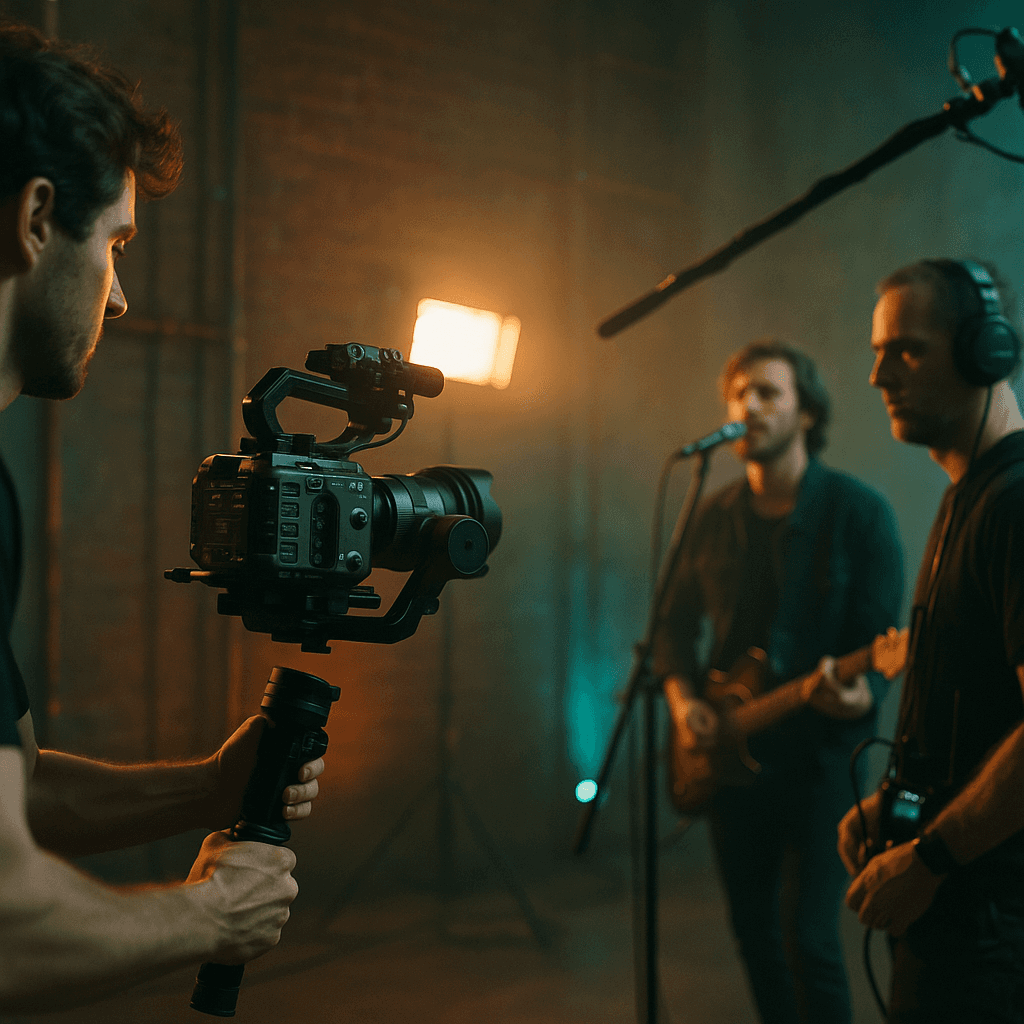
From idea to screen: the music video production process
Recording a music video begins long before the cameras are rolling. A structured production process ensures that your creative vision is actually realized — within budget and schedule. Here's an overview of the essential steps:
Pre-production: the foundation of success
Every strong music video starts with a clear concept. What is the story behind your track? What emotion do you want to convey? What visual style suits your music? In the pre-production phase, you work this out in a treatment: a document describing what happens in the clip, which locations you use, which cast you need, and which technical resources are required.
In addition, you create a storyboard: a visual representation of each scene, shot by shot. This not only helps you and your team to be on the same page, but also saves valuable time during filming. An extra day of filming because you have to improvise on the spot quickly costs an additional €1,500 to €3,000.
Finally, in this phase, you arrange all practical matters: location permits, insurance, catering for the crew, and booking equipment. Good preparation is half the battle — and prevents expensive surprises.
Step by step: how to record a music video
1. Concept & Treatment
Develop a strong story that fits your music. Write a treatment describing the visual style, locations, and cast.
2. Storyboard & Planning
Visualize each scene in a storyboard. Plan shooting days, arrange locations, and book the necessary crew and equipment.
3. Production: the shooting day
Film according to the storyboard. Work efficiently, pay attention to light and sound, and ensure enough takes per scene.
4. Post-production: editing & color
Edit the footage, add effects, apply color correction, and mix the audio. This is where the magic happens.
5. Distribution & Promotion
Upload the clip to YouTube, Spotify, and social media. Launch a coordinated campaign with teasers and behind-the-scenes content.
Production: the shooting day itself
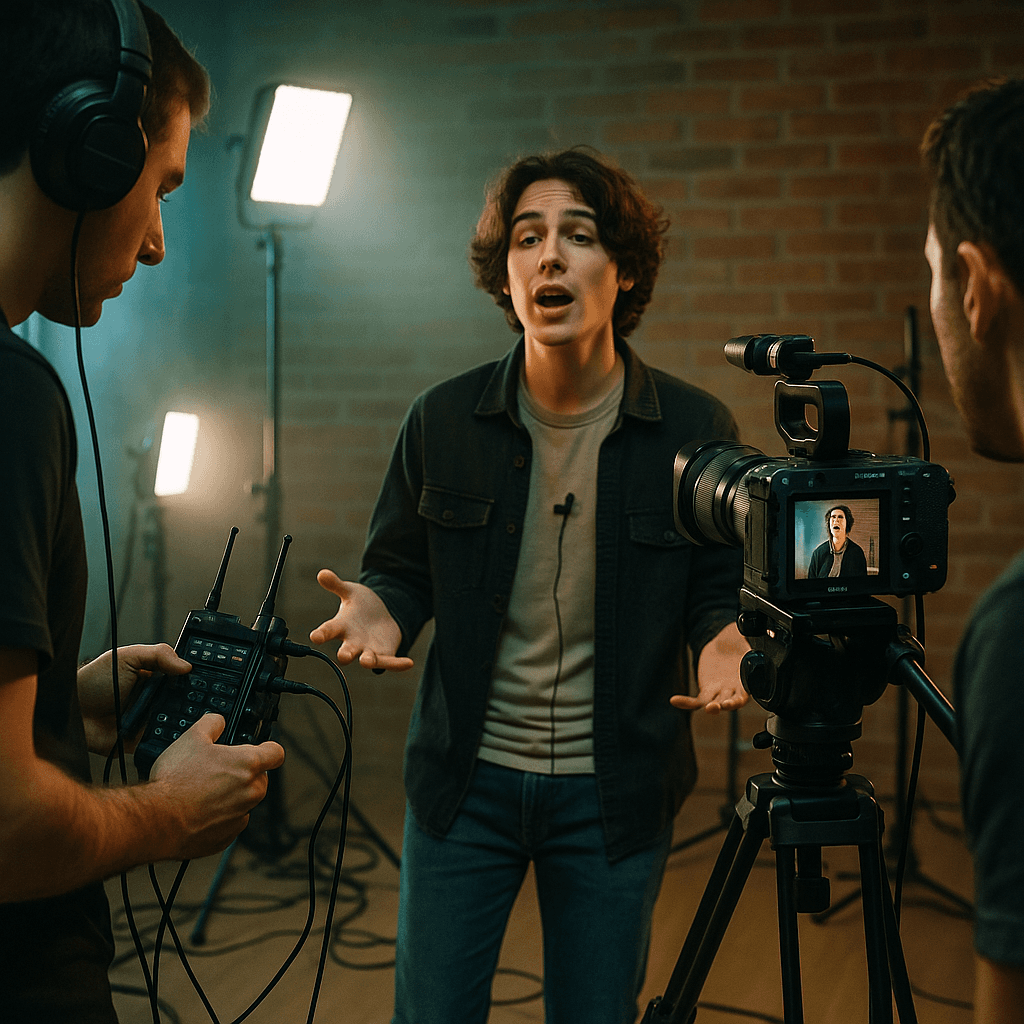
The day you actually record the music video is often intense, but also the most creative part of the process. A typical shooting day for a music video lasts 8 to 12 hours, depending on the complexity of the concept. Here are the crucial elements to pay attention to:
Location and light
The choice of location makes or breaks your music video. Do you want a raw, industrial atmosphere? Choose an abandoned factory or urban environment. Are you looking for a dreamy, romantic look? Think of natural settings with soft lighting during the golden hour (the hour after sunrise or before sunset).
Lighting is just as important as the camera itself. Professional music videos use a combination of natural light and artificial light to create atmosphere. Invest in good lights or hire a lighting specialist — the difference in quality is enormous.
Audio on set
Although the music is added in post-production, it is crucial that artists playback to the original track during filming. Ensure a good sound system on set so everyone can hear the song and move to the beat. Nothing is more frustrating than an artist who is not in sync with the music.
Multiple takes and camera angles
Film each scene from multiple angles and take multiple takes. This gives your editor many more options during editing. A good rule of thumb: film at least 3x as much material as you ultimately use. For a 3-minute clip, this means you record 20-30 minutes of usable material.
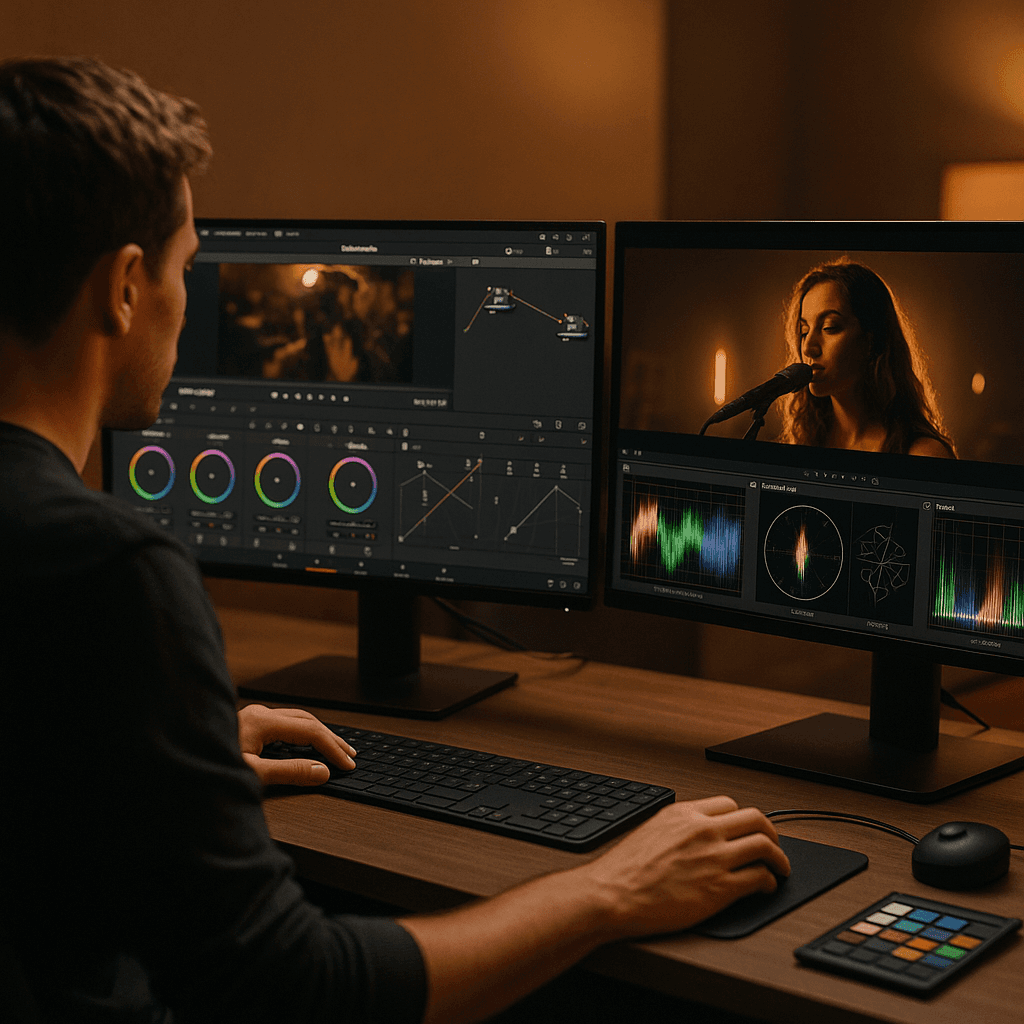
Post-production: where the magic happens
Post-production is the stage where your raw footage is transformed into a polished, professional music video. This process can take several days to weeks, depending on the complexity of the effects and the number of revision rounds.
Editing and timing
A good editor cuts the footage synchronously to the music, ensures smooth transitions, and creates a visual rhythm that enhances the energy of the track. The editing determines the pace of the clip: fast cuts for uptempo songs, longer shots for ballads.
Color correction and grading
Color correction ensures that all shots look consistent, while color grading adds the artistic signature. Do you want a warm, nostalgic atmosphere? Choose orange and yellow tones. Are you looking for a futuristic, cool look? Go for blue and cyan. In 2026, many editors use AI tools to speed up this process, but the creative choices remain human.
Visual effects and animations
From simple text overlays to complex CGI: visual effects can take your music video to the next level. However, think strategically: effects should support the music, not distract from it. Less is often more.
3 essential elements for a successful music video
Strong story
A music video without a story is like a song without a chorus. Ensure a clear narrative that engages the viewer and evokes emotion.
Professional execution
Invest in good equipment, experienced crew, and sufficient preparation time. Quality is visible and determines how seriously your music is taken.
Strategic distribution
A music video is not an end product, but the starting point of a campaign. Plan your release, use social media smartly, and remain consistent in your communication.
What does recording a music video cost in 2026?
One of the most frequently asked questions by artists is: what should a music video cost? The answer is complex, as the price depends on countless factors: the length of the clip, the number of shooting days, the size of the crew, the locations, any cast, and the complexity of post-production.
As a general guideline, you can assume the following ranges:
- Budget clip (€1,500 – €3,000): One shooting day, small crew (director + cameraman), simple location, minimal post-production. Suitable for aspiring artists or quick social media content.
- Mid-range clip (€3,000 – €8,000): Two shooting days, full crew (director, cameraman, lighting specialist, editor), multiple locations, professional color grading, and some effects. This is the sweet spot for many independent artists.
- High-end clip (€8,000 – €25,000+): Multiple shooting days, large crew, cast, complex effects, drone shots, special equipment. Comparable to what you see with established artists on major labels.
Important to know: the price of recording a music video is not an expense, but an investment. A strong clip can accelerate your career, generate more bookings, and grow your fanbase. Calculate what one extra concert or 10,000 extra streams will bring you — often a good music video pays for itself within a few months.
Do you want to know more about the possibilities and costs for your specific project? Please contact VidéPro via videpro.nl/contact for a no-obligation consultation.
Distribution: how to get your music video seen?
Recording a music video is only half the battle — distribution determines its success. In 2026, there are countless channels through which you can distribute your clip, but each platform requires a different approach.
YouTube: the home base
YouTube remains the primary platform for music videos. Upload your clip in the highest quality (minimum 1080p, preferably 4K), optimize your title and description with relevant keywords (such as 'record music video', 'new music 2026', your genre), and add timestamps. Use YouTube Premieres to create an event around the release.
TikTok and Instagram Reels: viral opportunities
Short clips of 15-60 seconds perform best here. Create a vertical version of your music video and encourage fans to start challenges. A good TikTok strategy can make your track go viral, even without a large budget. Platforms like these prioritize video content — posts with video get an average of 48% more reach than static images.
Spotify Canvas and Apple Music
Don't forget that streaming services also support visual content. Upload a short loop (3-8 seconds) as a Spotify Canvas to visually support your track. This increases the chance that listeners will add your song to their playlist.
Behind-the-scenes and extra content
Milk your music video by creating extra content: a making-of, bloopers, acoustic versions, lyric videos. Every video is a new opportunity to be discovered by algorithms. Structural video use in 2026 is no longer an option, but a requirement for sustainable growth.
DIY or professional production: what suits you?
Many artists struggle with the question: can I record my music video myself, or should I hire a professional company? The answer depends on your budget, experience, and ambitions.
When does DIY work?
For quick social media content, behind-the-scenes clips, or lyric videos, you can easily get started with a good smartphone, a stable gimbal, and free editing software like CapCut or iMovie. This approach is fast, cheap, and gives you full creative control. The downside: the quality is often visibly lower, and you lack the experience of a professional crew who knows how to optimally use light, sound, and composition.
Why choose a professional?
If you want to make a serious breakthrough, a professionally produced music video is a must. An experienced video production company like VidéPro brings not only technical expertise, but also strategic advice: what concept suits your target audience? How do you ensure the clip stands out among the millions of other videos? Which distribution channels yield the most return?
Moreover, a professional works more efficiently: what you try to film in three days, an experienced crew arranges in one day. The quality of image, sound, and editing is significantly higher, which directly impacts how your music is appreciated. In a market where first impressions count, a professional music video can make the difference between 'just another artist' and 'I need to remember this'.
The hybrid approach
Many artists opt for a combination: professional production for the main clip and DIY content for social media. This gives you the best of both worlds: quality where it counts, and speed and authenticity for daily content.
Frequently asked questions about recording a music video
The future of music videos: what comes after 2026?
The music industry continues to move, and music videos evolve with it. Here are some trends we expect in the coming years:
Interactive and immersive videos
Virtual reality (VR) and augmented reality (AR) are becoming more accessible. Imagine: fans who can 'enter' your music video and view it from different perspectives. Or AR filters that bring your clip to life in the viewer's living room. These technologies are still niche now, but will become mainstream in the coming years.
AI-generated content
AI tools are becoming increasingly sophisticated. In 2026, we are already using AI for color correction and effects, but the next step is AI that can generate or supplement entire scenes. This drastically reduces production costs, but also raises questions about authenticity. The art will be to strategically use AI without losing the human touch.
Sustainability in video production
The creative industry is becoming increasingly aware of its ecological footprint. Expect more music videos to be produced locally, with renewable energy and minimal travel. Artists who embrace this can also use it as part of their brand identity.
Whatever changes: recording a music video remains a powerful way to bring your music to life and leave a lasting impression on your audience. Invest in quality, stay authentic, and use video strategically as part of your broader career strategy.

Ready to record your music video?
VidéPro helps artists and bands with professional music videos that stand out. From concept to distribution: we think strategically and deliver a final result you can be proud of. Contact us for a no-obligation consultation about your project.
Schedule an introduction